Home › Dinner guides › Picky-Eater Dinner Ideas That the Whole Table Will Eat
Picky-Eater Dinner Ideas That the Whole Table Will Eat
By the What's for Eats kitchen crew · Updated October 23, 2026
One family dinner. Room for everyone.
Build-your-own meals, familiar foods, and gentle ways to make dinner less stressful—without cooking a separate menu.
Original illustrated food artwork
🍽️ Five flexible family dinners🥦 Low-pressure serving ideas🛒 One practical shopping plan
If dinner at your house comes with negotiations, you are in very large company. Picky eating is common in kids, and the goal is not to win a standoff but to make meals calmer and give children plenty of chances to get comfortable with new foods. Here are strategies and dinners that help.
Five strategies that lower the pressure
Serve it deconstructed. Keep foods separate so kids can build their own plate. Tacos, baked potatoes and pasta bars work well.
Keep one safe food on the table. Bread, rice, fruit or plain pasta means nobody leaves hungry.
Offer, do not push. Place new foods on the table without pressure. Kids often need many exposures before they accept something.
Let them help. Stirring, sprinkling and naming a dish makes children more curious about eating it.
Eat together when you can, and let them see you enjoying the food.
Dinners that are easy to customize
Baked potato bar
Microwave or bake potatoes and set out cheese, black beans, broccoli, sour cream and salsa. Each person tops their own. Our microwave sweet potato with black beans works the same way.
Taco night
Salsa chicken, seasoned beans or ground meat, tortillas and a row of toppings. See slow cooker dinners for an easy base. Cook ground meat to 160°F.
Pasta bar
Plain pasta, marinara, butter and parmesan, plus optional white beans, spinach or chopped vegetables on the side. Our pantry tomato pasta can be served this way.
Fried rice with mix-ins
Cook plain rice and eggs, then let everyone add peas, carrots or scallions. It is also a smart leftover chicken rescue.
Quesadilla night
Cheese is the foundation. Add beans, chicken or finely chopped spinach for those willing to try it.
Five complete build-your-own dinners
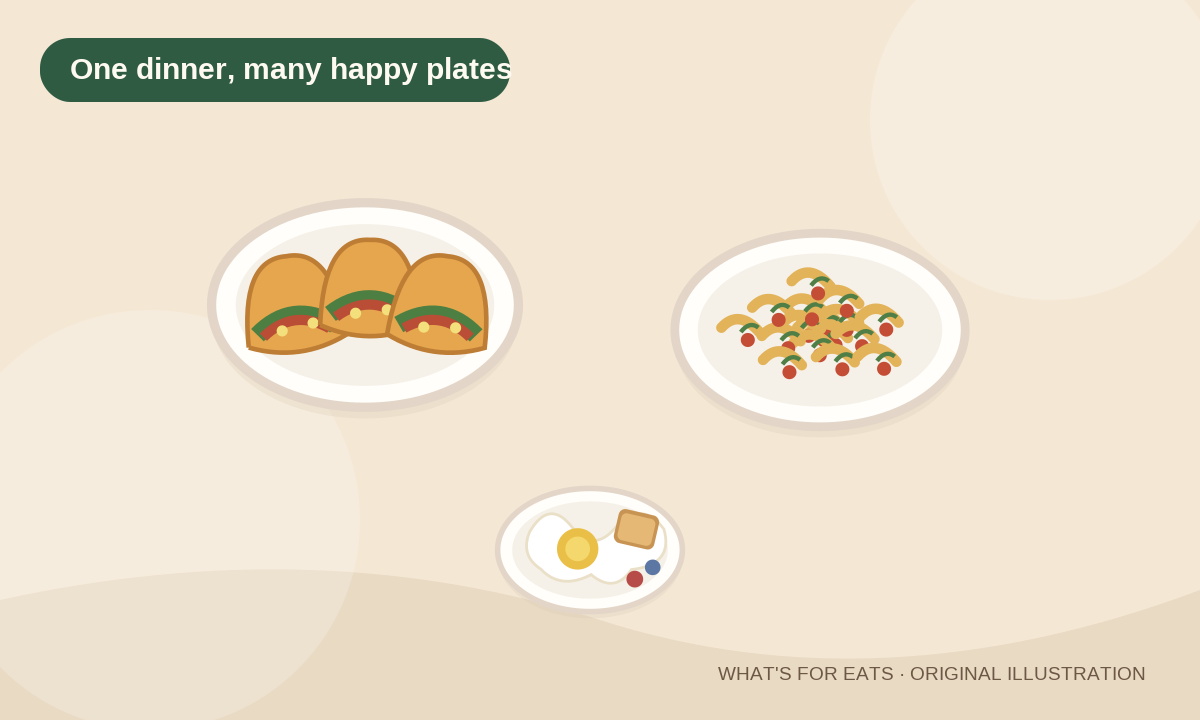
Illustrations below show meal ideas, not photographs of tested recipes. Follow the written ingredient quantities and instructions for cooking.
These flexible starting quantities generally serve four; adjust portions for ages and appetites. They are not claimed to be kitchen-tested. Offer a familiar food with each meal and let diners choose how to combine components.
Family-style • About 20–30 minutes
Original food illustration · serving inspiration
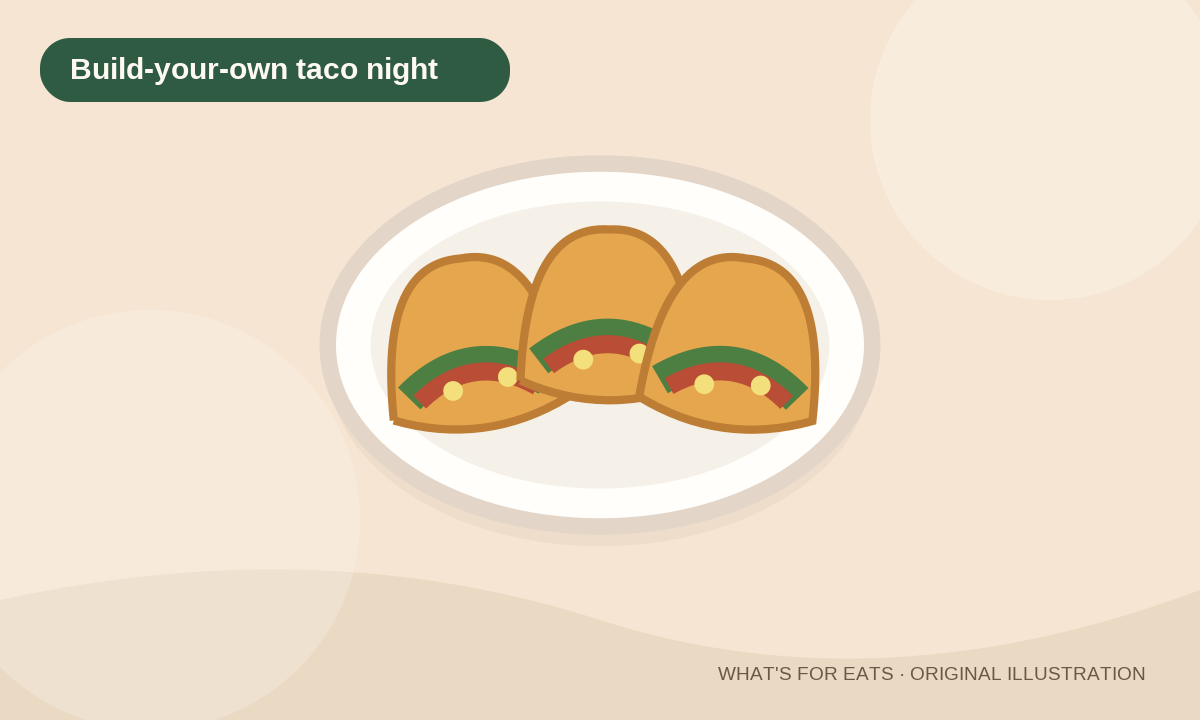
Build-your-own taco night
Ingredients: 8 small tortillas; 2 cans (15 oz each) black beans, drained; 1 cup shredded cheese; 1 cup chopped lettuce; ½ cup mild salsa.
How to make it: Warm beans in a saucepan until hot. Warm tortillas according to package directions. Place beans, cheese, lettuce and salsa in separate bowls. Everyone assembles a taco or eats familiar components separately.
Low-pressure serving tip: Keep salsa in its own bowl. Offer a plain tortilla and beans without requiring a bite of lettuce.
Family-style • About 20–25 minutes
Original food illustration · serving inspiration
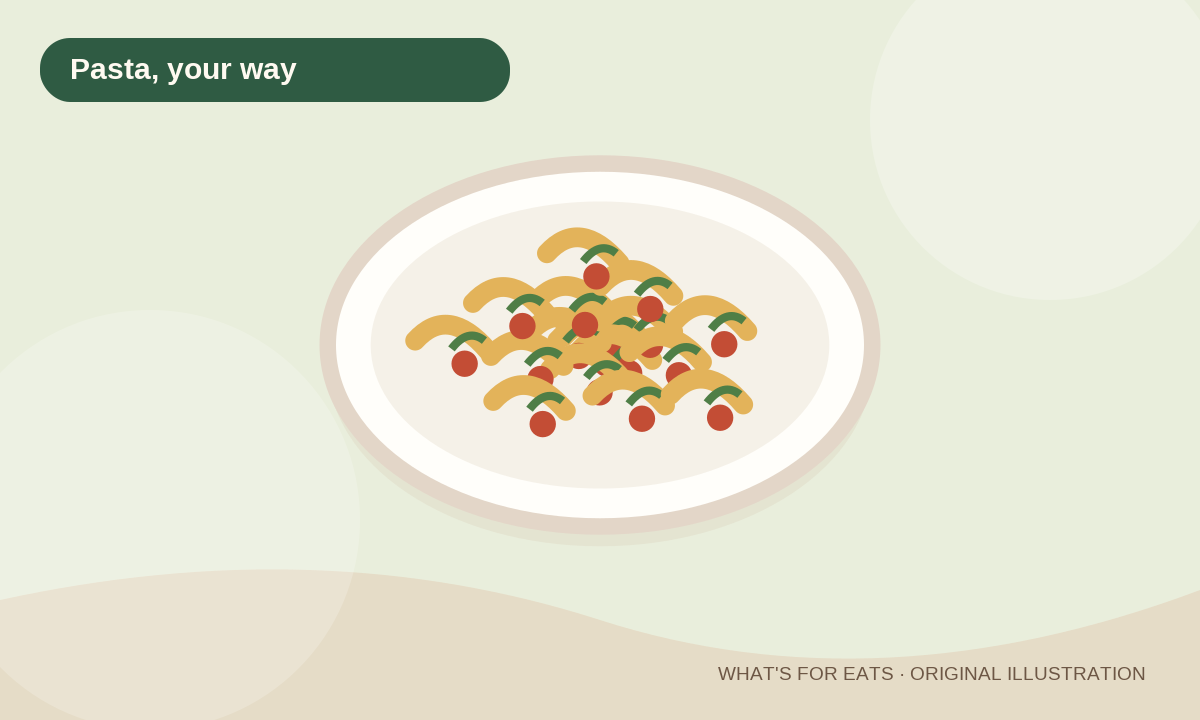
Two-way pasta bowls
Ingredients: 12 oz dry pasta; 24 oz marinara; 1 cup grated Parmesan; 2 cups frozen peas; optional 12 oz fully cooked meatballs.
How to make it: Cook pasta according to the package; reserve ½ cup pasta water and drain. Heat sauce separately. Cook peas until hot and reheat meatballs according to package directions. Offer plain pasta, sauce, peas, cheese and optional meatballs in separate serving bowls.
Low-pressure serving tip: Start with a familiar plain pasta portion and let diners choose if sauce touches it.
Family-style • About 15–20 minutes
Original food illustration · serving inspiration
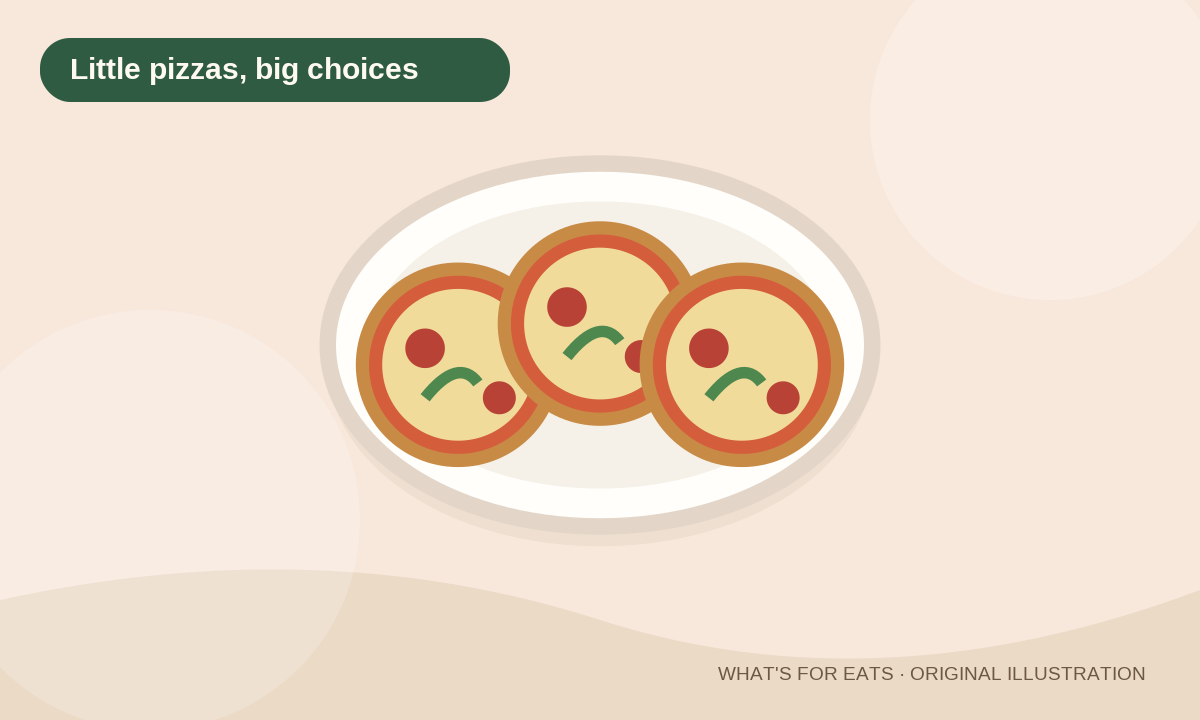
Mini pita pizza station
Ingredients: 4–6 mini pitas; ¾ cup pizza sauce; 1½ cups shredded mozzarella; 1 bell pepper, finely diced; ½ cup sliced olives, optional.
How to make it: Heat oven to 400°F. Set pitas on a baking sheet, spread a thin layer of sauce on each, and add mozzarella. Put pepper and olives on only the pizzas where wanted. Bake 8–12 minutes until cheese melts and pitas are crisp.
Low-pressure serving tip: Let each person choose toppings; a cheese-only pita is part of the same dinner.
How to make it: Wash fruit and cucumber. Toast bread. Scramble eggs over medium-low heat until fully set. Arrange eggs, toast, fruit, yogurt and cucumber in separate serving dishes so diners can build plates.
Low-pressure serving tip: A child can choose which familiar components to take; do not make vegetables a condition for dessert.
How to make it: Heat oven to 425°F. Halve potatoes and roast with 1 tbsp oil for 12–15 minutes. Add sliced fully cooked sausage and broccoli tossed with remaining oil and garlic powder. Roast 15–20 minutes longer until potatoes are tender and sausage is heated according to its label.
Low-pressure serving tip: Keep ingredients in separate zones on the pan. Serve each item separately or combined.
Five low-pressure picky-eater dinners with real assembly steps
Build-your-own taco night
Warm tortillas and fully cooked seasoned chicken or beans. Set cheese, cucumber, corn, salsa and lettuce out separately. One diner may make a loaded taco while another has tortilla, cheese and beans beside each other. Offer one familiar component without making a second meal.
Two-way pasta bowls
Cook pasta according to the package. Warm tomato sauce and optional meatballs in a separate pot. Offer pasta plain, sauce on the side, Parmesan and a familiar vegetable in separate bowls. Put leftovers away promptly and use them as next-day lunch only if stored safely.
Mini pita pizza station
Put a little pizza sauce, mozzarella and optional vegetables on small pitas; leave some cheese-only for diners who prefer simple food. Bake until cheese melts and bread is hot and crisp. Ask children to choose toppings if they want to participate, without requiring them to try a new topping.
Breakfast-for-dinner plates
Serve fully cooked scrambled eggs, toast, yogurt and fruit. Keep the food separate for those who prefer clear textures and familiar components. Add a vegetable or protein that works for the household, and avoid making any one food the condition for eating another.
Sheet-pan family sampler
Roast small potatoes, fully cooked sausage and a chosen vegetable on a roomy pan until everything is properly heated or cooked; use a thermometer when required. Keep sections separate on the pan when possible. Let people combine foods after serving rather than insisting on a mixed plate.
What progress can look like
Eating a full portion of an unfamiliar food is not the only sign of progress. Your child may tolerate a new dish on the table, smell a sauce, help wash a vegetable, or accept the same ingredient in a new format. Respect refusals. If food variety is extremely limited, meals cause severe distress or weight and growth are affected, seek individualized guidance from a healthcare professional.
Same ingredients. Different plates.
A taco can be assembled, eaten in separate pieces, or served as a simple bean-and-cheese plate. Keeping choices visible is often more practical than making multiple dinners.
Small tricks that help
Cut food into fun shapes or serve dips. Many kids like to dunk.
Pair a new food with a favorite one on the same plate.
Use small portions so a new food feels less overwhelming.
Avoid labeling kids as picky. Say "you're learning to like it."
When to ask a professional
If your child eats a very limited range of foods, is losing weight, gags frequently or seems distressed around meals, talk to your pediatrician. Occasional pickiness is normal, but persistent concerns deserve a professional opinion.
Plan it in
Build one flexible dinner into your weekly meal plan. The Cheap Dinner Vault also includes picky-eater notes with simple swaps on every dinner.
Let us take dinner off your plate
The Rescue Kit picks dinner by how tired you are. The Cheap Dinner Vault shows what each dinner costs.
Repeat the same meal structure across the week so dinner stays predictable, while offering optional ways to explore new ingredients. A child does not need to taste a new food for the meal to be worthwhile.
Night
Family dinner
Familiar component
Optional exploration
Monday
Taco bar
Tortilla and cheese
Smell salsa or choose one topping
Tuesday
Two-way pasta
Plain pasta
Put sauce in a separate dipping bowl
Wednesday
Mini pita pizzas
Cheese pita
Help arrange a topping on a shared pizza
Thursday
Breakfast for dinner
Toast and eggs
Help rinse fruit or cucumber
Friday
Sheet-pan sampler
Potatoes
Choose whether broccoli goes on the plate
Shop once for the week
Produce: lettuce, bell pepper, broccoli, cucumber, berries or other familiar fruit, and baby potatoes. Pantry: tortillas, dry pasta, jarred marinara, pizza sauce, black beans, mini pitas and garlic powder. Refrigerated or frozen: shredded cheese, eggs, yogurt, fully cooked sausage, frozen peas and optional meatballs. Buy quantities based on which dinners you actually plan to serve and your household size.
Prepare components instead of separate meals
Use bowls or a divided platter for sauces and toppings. Prepare one shared protein or starch and offer ingredients in separate dishes when possible. Keep mealtimes predictable, and avoid rewards, pressure or bargaining over bites. If someone declines a new ingredient, the meal can continue without conflict.
When a child refuses everything on the table
Consider whether there was a familiar option and whether the meal schedule is working for your family. Keep your response neutral rather than forcing a taste. Avoid treating this as a contest or withholding food as punishment. If refusals are frequent, the range of accepted foods is very small, or you notice pain, choking, gagging, growth concerns or marked distress, seek individualized support from a pediatrician or qualified feeding professional.
Important: These are general family-meal ideas, not treatment for feeding disorders. Adapt textures, portion sizes and choking precautions to the child's age and developmental needs. For more information, see USDA MyPlate for Kids.
What success can look like this week
Notice whether dinner feels calmer, whether the family can share one basic menu, and whether everyone has a comfortable way to participate. Trying, smelling or touching an unfamiliar food may happen over time, but none should be demanded. The goal is a sustainable routine, not a guaranteed number of new foods eaten.
Explore every dinner guide
Keep building your weeknight plan with these related guides. Each one covers a different part of getting dinner on the table.
Original What’s for Eats visual guide — save this framework for another busy night.
Worked example: taco night without making two dinners
Put warm tortillas, seasoned beans or chicken, lettuce, shredded cheese and mild salsa on the table separately. One person may build a fully loaded taco; another may eat tortilla, cheese and beans separately. Offer at least one familiar food and allow people to choose what and how much they eat. There is no need to disguise every unfamiliar vegetable or bargain over bites.
Make exploration low-pressure and repeatable
Choose one small, optional learning step: let a child rinse cherry tomatoes, place a new vegetable on a shared platter, smell a sauce, or serve themselves a tiny portion. If they do not try it, the meal can still be successful. The Ellyn Satter Institute's division of responsibility recommends caregivers decide what, when and where to serve, while children decide whether and how much to eat. This is general feeding guidance, not a solution to medical swallowing or nutritional difficulties.
Five flexible meal templates
Rice bowls: rice, beans or chicken, vegetables and sauce in separate dishes.
Pasta night: pasta, sauce and protein served separately, with toppings on the side.
Breakfast for dinner: eggs, toast, fruit and yogurt; familiar items can be mixed or separated.
Baked potato bar: potatoes with beans, cheese, broccoli and sauce as optional toppings.
Build-your-own mini pizzas: bread or pita, cheese, sauce and optional toppings.
When family-level strategies are not enough
Talk with a pediatrician or registered dietitian if a child is losing weight, has choking or swallowing problems, experiences major distress around eating, or eats such a narrow range that nutrition may be affected. Avoid using force or withholding familiar foods as punishment. For more ideas, see the complete seven-night plan and the Academy of Nutrition and Dietetics' mealtime guidance.
Our editorial approach: These are practical dinner guides, not a claim that every variation has been kitchen-tested. Cooking time and costs depend on your ingredients and equipment. See how What's for Eats develops its guides and our privacy information.
Get the free PDF version
Enter your email and we’ll send you the actual PDF as an attachment, with a direct PDF link too. The newsletter is optional.